Pool Rules
Pool Rules
Note:
The Pool Rules section of the Enterprise Portal is only available in Account context.
Rules define events which - when the event condition is fulfilled - automatically trigger one or many Actions. The event conditions in Pool Rules are related to SIM Pools.
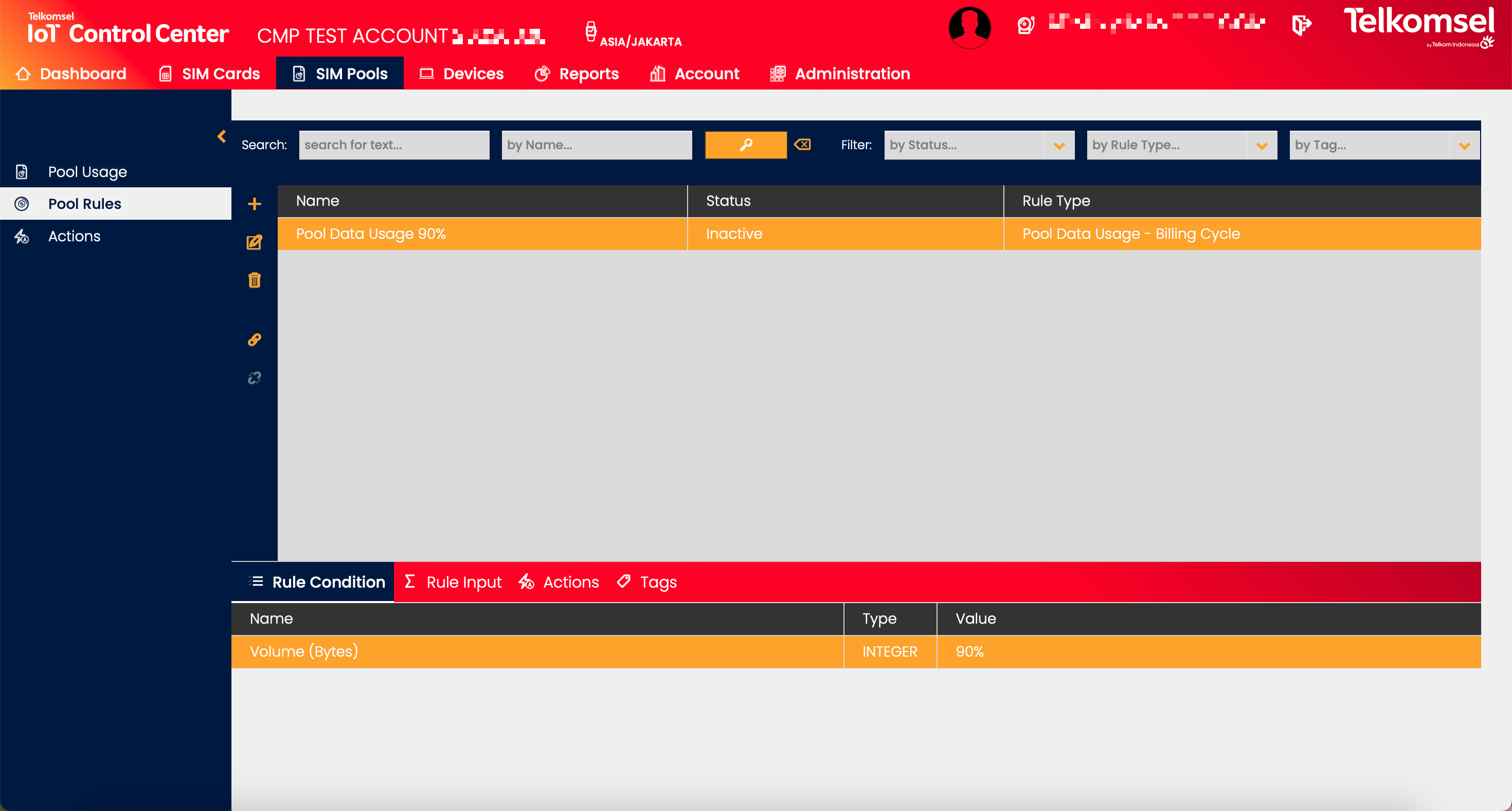
Search for a Pool Rule
The search option of the Pool Rules module allows Users to retrieve a list of Pool Rules by entering text into the Search field. Additional specific search fields are available:
- Name
Search results may be filtered with the criteria given in the Search bar.
Filters:
- Status
- Rule Type
- Tag
The defined search criteria can be removed by clicking on the Clear search  icon.
icon.

Create a Pool Rule
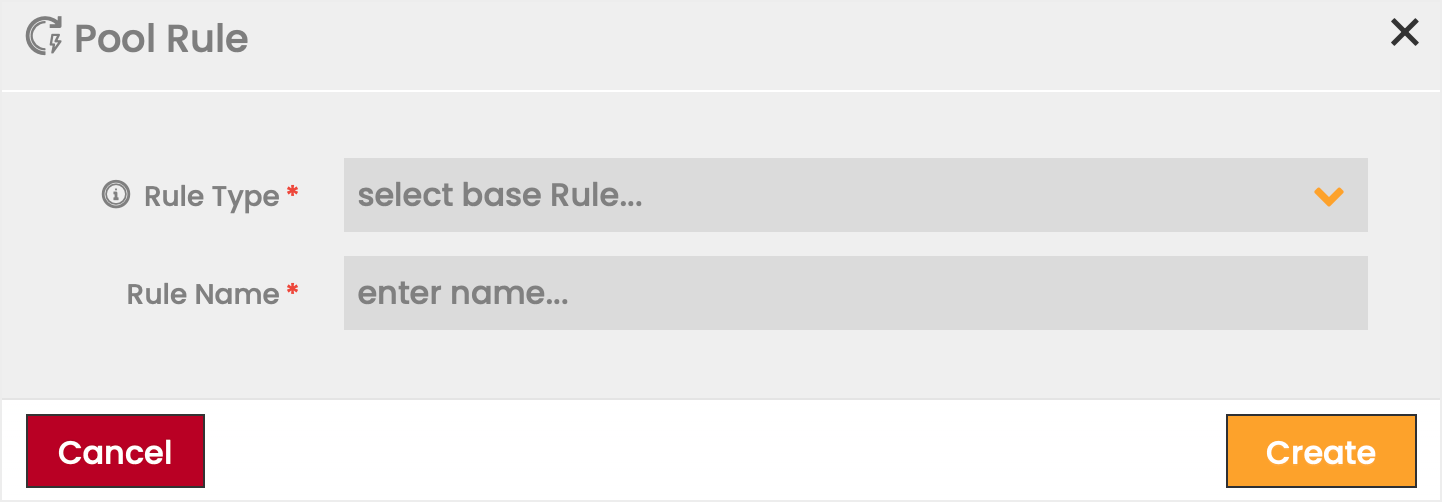
To create a Pool Rule:
- Click on the Add
 icon.
icon. - Select a Rule Type from the available options in the dropdown list.
Note: The dialog box adapts to the selected Rule Type. - Enter a unique name for the Pool Rule.
- Define whether the threshold shall be defined as an absolute value or a % value (of the respective Pool size).
Note: The Threshold/% label will adapt to show the corresponding unit (depending on the Rule Type) or the % (in case '%' is selected). - Select a Pool Price Plan to which the Rule will apply.
- Click Create to save the Rule.
Edit or Delete Pool Rules
The settings of any Pool Rule can be edited while in the INACTIVE status.
- Click the Edit
 icon to modify the settings seen in the Pool Rule creation. Once the Pool Rule is activated, the data displayed in the edit dialog becomes read-only.
 - Click the Delete
 icon to delete a Pool Rule.
Update Pool Rule Status
Pool Rules exist as ACTIVE, and INACTIVE in the Enterprise Portal. Initially, all Pool Rules are created in INACTIVE status, however, only activated Pool Rules will be executed.
Note:
In order to activate a Pool Rule, at least one activated Action must be assigned.
- Click the Activate
 icon to change the status from INACTIVE to ACTIVE.
 - Click the Deactivate
 icon to change the status from ACTIVE to INACTIVE.
Pool Rule Types
The following table explains the scope of each Pool Rule Type.
Rule Type | Explanation | Rule Type | Explanation |
|---|---|---|---|
Pool Data Usage - Billing Cycle | User-defined parameter for a specific volume of data usage within a Pool Price Plan in the Home Zone. | Pool Voice MO Usage - Billing Cycle | User-defined parameter for a specific volume of Voice MO usage within a Pool Price Plan in the Home Zone. |
Pool SMS MO Usage - Billing Cycle | User-defined parameter for a specific amount of SMS MO within a Pool Price Plan in the Home Zone. | Pool Voice MT Usage - Billing Cycle | User-defined parameter for a specific volume of Voice MT usage within a Pool Price Plan in the Home Zone. |
Pool SMS MT Usage - Billing Cycle | User-defined parameter for a specific amount of SMS MT within a Pool Price Plan in the Home Zone. |
Note:
Billing Cycle and 24 hours monitoring periods follow the specific CSP Time Zone, which may differ from UTC.
Notification Types
The following table explains the different types of Notifications.
Notification | Components | Amount of expected delay |
|---|---|---|
Near Real-Time | OUC-A | Millisecond - seconds delays |
Process-Based | OUC-B, ESB | Minutes - hours delay |
Report Based (Next schedule) | DAR | 1 - 2 days delay |
For example:
Notification for Not Connected - Billing Cycle is an offline event, the expected delivery time is 1-10 days, depending on how the system is configured and how long the system waits to collect all data until the trigger detects the event.
Pool Rules - Extended Details
For Pool Rules, it is possible to gain a quick view of the Rule's details through the Extended Details menu.
Rule Conditions
The Rule Conditions option displays all information that defines the conditions of the selected Rule.
Note:
For conditions based on SIM Card properties (Session Status, MSISDN Change, etc.), the Rule Condition panel will not be populated with any data.

Column | Description |
|---|---|
Name | Describes the focus of the condition. |
Type | Set as INTEGER for conditions that require a Value input. |
Value | A user-defined integer that sets the measure of the condition. |
Rule Input
The Rule Input option displays the characteristics of the Rule that, when combined with the condition, will trigger any related Action(s).

Column | Description |
|---|---|
Type | A quick reference to the scope of the Rule. |
Name | Category for the focus of the Value. |
Value | The parameter in which the Rule condition operates. |
Actions
The Actions panel lists all the Actions that have been assigned to a Rule and allows to add and remove Actions to the selected Rule.

Column | Description |
|---|---|
Sequence | Defines the order in with the action will be listed. |
Action | Displays the Action that is performed when the Rule is triggered. |
Action Type | Displays the Action Type selected at Action creation of each assigned Action. For the list of available options see the section Action Types below. |
Action Repetition Type | Defines how often can the Action be performed. The Action Repetition Type is defined by the Action Type and cannot be changed by the User.
|
Execution Type | Defined only for Action Types Change SIM Billing Status (if the target status is Suspended) and Change SIM Price Plan.
Note that the Execution Type field is only populated in case the Temporary (BC-Only) option has been selected at Action assignment. |
Action Schedule | Schedule of the Action execution.
|
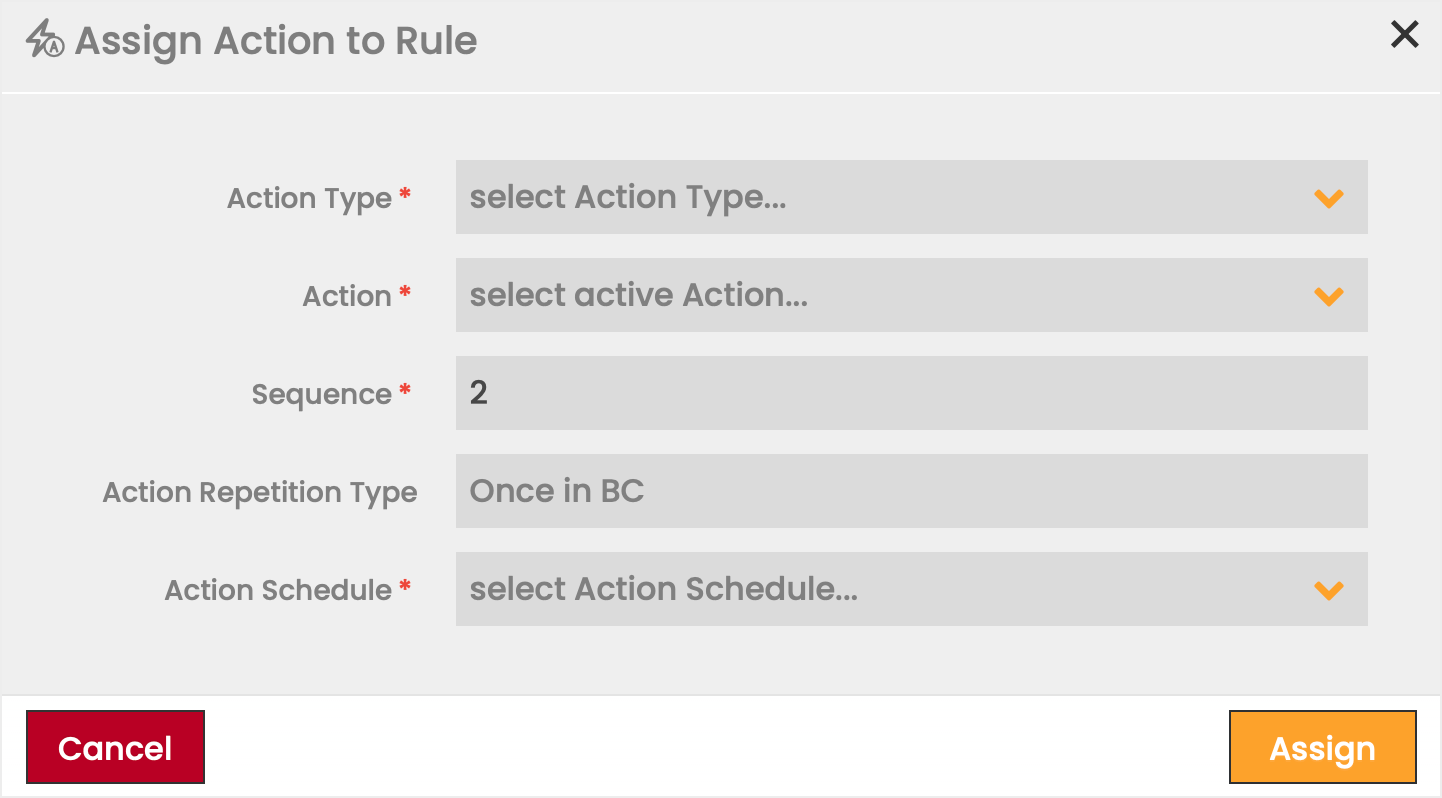
To assign an Action to a Rule:
- Select a Rule from the Pool Rules grid.
- Click on the Add icon in the Actions section.
- Define the information fields for the assignment.
Fields marked by a red asterisk are mandatory. - Click Assign to apply your selection.
Field | Description |
|---|---|
Action Type | Defines which options are available in the Action dropdown list (i.e. only Actions of the selected Action Type will be available). |
Action | One of the activated Actions related to the Action Type. |
Sequence | The order in which the Actions are listed for viewing (0-999999999). Note: The CMP initiates an Action when the corresponding Rule is triggered, regardless of Sequence order. |
Action Repetition Type | Defines how often can the Action be performed. The Action Repetition Type is defined by the Action Type and cannot be changed by the User.
|
*Execution Type | Execution Type is only available if Action Type Change SIM Billing Status or Change SIM Price Plan is selected. Note: Temporary (BC-ONLY) changes are only applicable if the target Billing Status is Suspended or the target Price Plan is Postpaid. |
Action Schedule | Schedule of the Action execution.
|